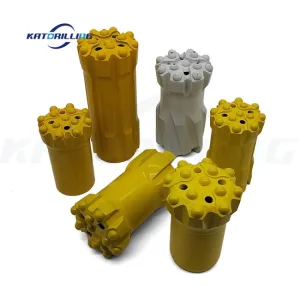
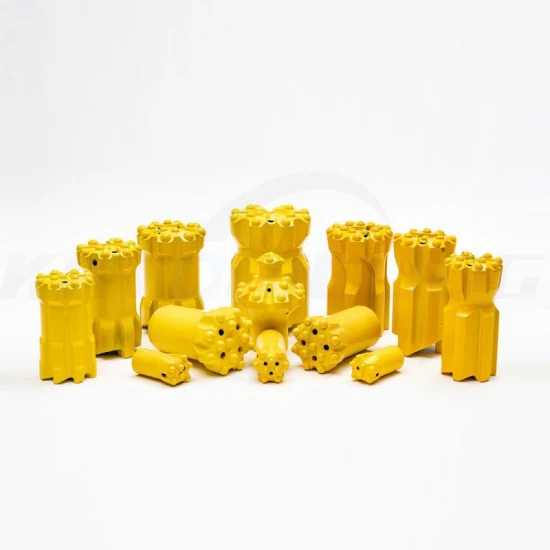
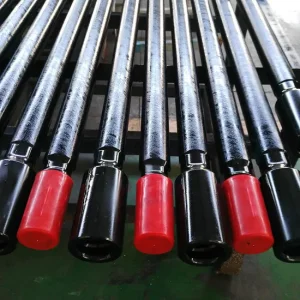
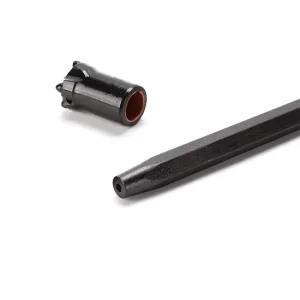
Modern rock drilling demands an optimum transfer of impact energy from the hydraulic drifter, through the drill string components (shank adapters, couplings, rods), directly into the rock face. As a premier Chinese manufacturer, Shandong Kat Drilling Tools leverages premium alloy steels and specialized tungsten carbide inserts to maximize rock fracture efficiency while minimizing metallurgical fatigue.
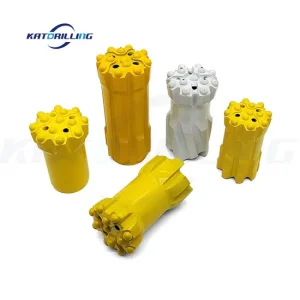
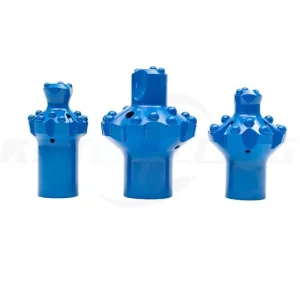
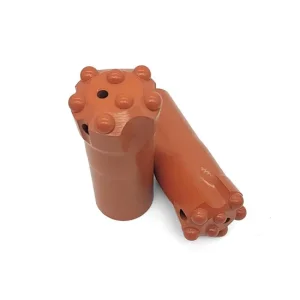
Our engineering matrix maps specific rock types (unconfined compressive strength or UCS, abrasive minerals, fracture planes) to bit profiles. For instance, in hard, highly abrasive granite, the drop center retrac profile paired with hemispherical button geometry prevents premature wear and stabilizes hole straightness.
"Selecting the correct thread profile (e.g., T38, T45, T51, or GT60) and carbide insert arrangement directly dictates the Net Penetration Rate (NPR) and Cost-Per-Meter (CPM) of your drilling operation."
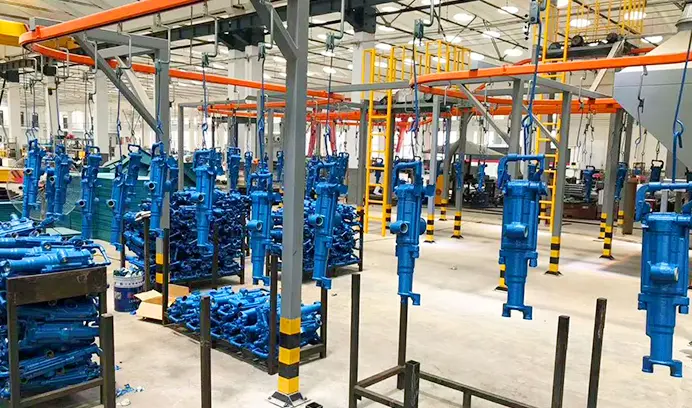

SHANDONG KAT DRILLING TOOLS is one of the most professional manufacturers of rock drilling tools in China. In terms of overall strength, it takes the lead among enterprises of the same industry. The company mainly produces over 500 kinds of products including rock drilling tools, mining tools, and geotechnical exploration accessories.
The global mining sector is shifting towards automated, autonomous drill rigs equipped with ultra-fast hydraulic drifters. These modern machines inflict extreme stress on threaded rods and bits. Consequently, procurement departments are demanding tougher, more heat-resistant steel bodies capable of enduring cyclic fatigue without catastrophic thread failure.
Global mining operations are moving away from transaction-based tool purchases toward Cost-Per-Meter (CPM) agreements. This transition places the onus on factories to supply consistent, high-yield tools. Shandong Kat addresses this demand by offering trace-monitored metallurgical batches and certified grade tungsten carbides like the YK05.
Decarbonization targets among major miners dictate that tools must have longer lifespans. Re-grinding button bits must be easily executable. Our button bits feature optimized spacing profiles, allowing for multiple, simple dressing and grinding intervals before ultimate scrap status is reached.
Relying on single-source premium western brands poses severe lead-time risks. Leading buyers in Australia, South America, and North America now run comparative field trials, pairing Western rigs with top-tier Chinese consumables from Shandong Kat. These test programs often demonstrate equal meterage outputs at 30-45% lower procurement costs.
Our rock bits are constructed using premium structural alloy steel, subject to advanced carburizing and heat treatments. This yields a surface hardness of 58-62 HRC for wear protection, combined with a tough core to absorb shock loading. Below is an overview of our key metallurgical and engineering profiles:
| Parameter | Tungsten Carbide Grade YK05 | Alternative Standard Carbides | Impact on Drilling Performance |
|---|---|---|---|
| Density (g/cm³) | 14.4 - 14.8 | 14.1 - 14.5 | High density ensures structural homogeneity and prevents micro-void cracking under percussion. |
| Hardness (HRA) | 89.5 - 91.5 | 88.0 - 90.0 | Optimal wear resistance when cutting through hard granitic formations without fracturing. |
| TRS (Transverse Rupture Strength) | ≥ 2800 N/mm² | ≥ 2400 N/mm² | High bending strength prevents buttons from shearing off under severe shear stress. |
| Grain Size Profile | Coarse / Medium Coarse | Fine / Medium | Coarse grain carbide structure resists crack propagation during extreme impact cycles. |
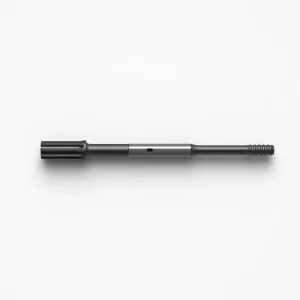
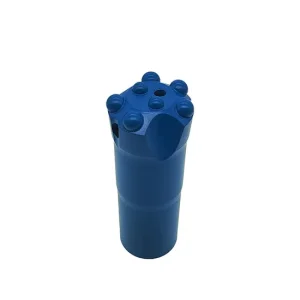
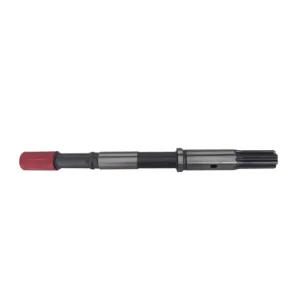
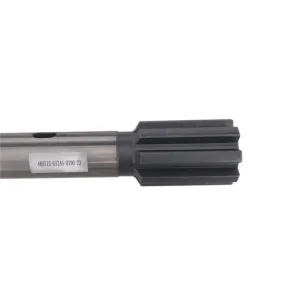
Tunneling operations require rapid cycle times, straight holes, and minimum face downtime. Our R28, R32, R35, T38, and T45 thread button bits are built precisely for drifting rigs. Combined with premium shank adapters (such as Montabert HC25 or COP 1838 Mux/Hux), our drill string assemblies ensure straight holes and minimal blast wall overbreak.
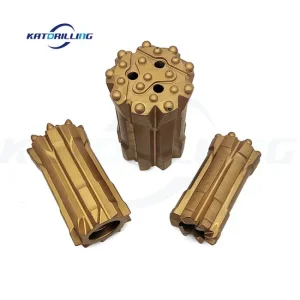
Bench mining demands heavy-duty performance. Under deep, vertical drilling regimes, we recommend the T51, GT60, and ST58 thread profiles with retrac bodies. Retrac bits feature a fluted design that actively forces rock chips back out of the hole, preventing high-friction jamming and rod sticking.
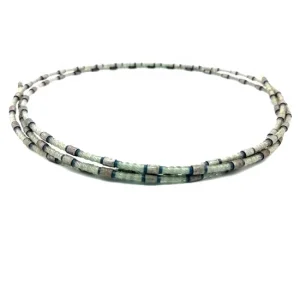
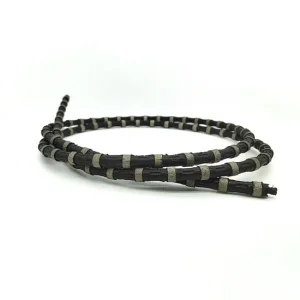
For operations cutting large-scale blocks, precision and durability are vital. We supply premium diamond wires (including 7.2mm for profiling and squaring, and 11mm for heavy block slicing). This tooling is engineered to execute continuous, linear, low-vibration cuts through hard granite and soft marble alike.
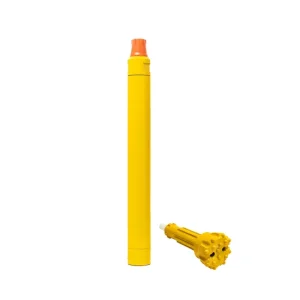
Our DTH (Down-The-Hole) tool range, including the DHD350 Hammer with Foot Valve, is built to pierce unconsolidated overburden and reach consolidated bedrock. Engineered to pair with high-volume portable air compressors, these hammers generate high percussive force for rapid penetration.
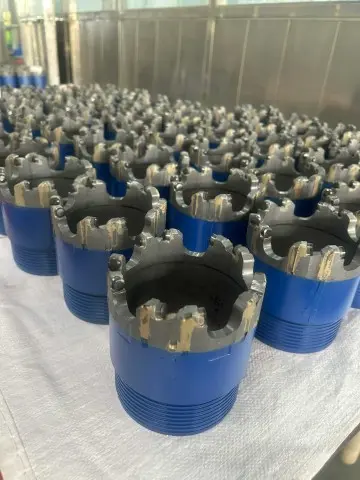
PDC core bit is a special drilling tool equipped with polycrystalline diamond compact (PDC) cutters designed to cut the...
Get Free Quote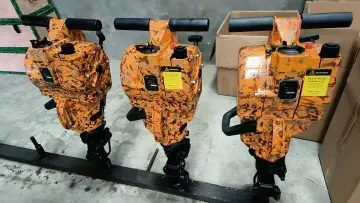
Internal Combustion Rock Drill has functions of drilling hole, cleavage, bruising, tamping and chiseling. It is widely use...
Get Free Quote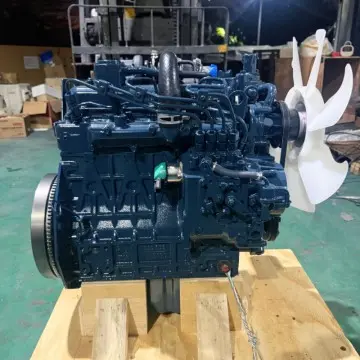
The Kubota V1505T is a high-performance, vertical, water-cooled, 4-cycle turbocharged diesel engine, belonging to acclaimed 05 Series...
Get Free Quote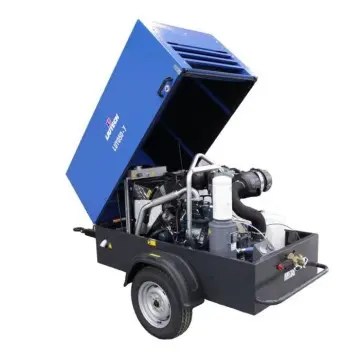
Increased efficiency and performance with the latest screw element technology. A powerful engine from respected brands...
Get Free Quote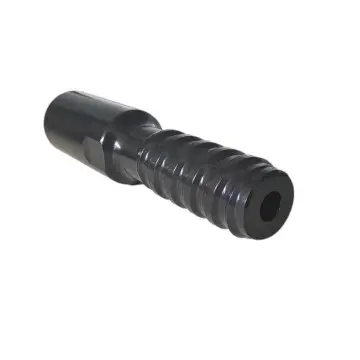
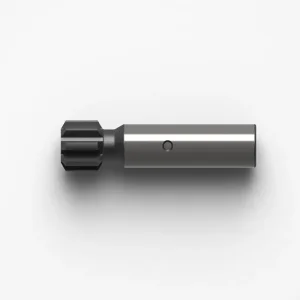
High performance couplings engineered to transmit the rotation torque and percussive force from the rig to the rod string.
Get Free Quote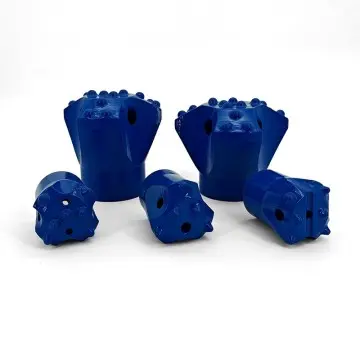
The TC (Tungsten Carbide) Button Bit is a critical high-performance component engineered exclusively for self-drilling anchor systems...
Get Free Quote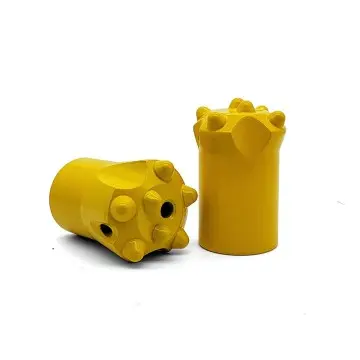
Optimized button layouts and water flushing channels for high rate of penetration in underground mining and construction.
Get Free QuoteAllows seamless interface transitions, designed to resist cyclic stress under high-frequency hydraulic drifter loads.
Get Free QuoteAll rock drilling consumables leaving the Shandong Kat manufacturing facility undergo rigorous physical and dimensional testing. Utilizing precision optical comparators, ultrasonic defect detectors, and micro-hardness testing equipment, we guarantee each bit, adapter, and coupling conforms to API, ISO, and CE specifications.
Every shipment is coded with a unique metallurgical batch tracker. This allows us to trace any field performance variance back to the raw material processing furnace, ensuring complete transparency and accountability for critical infrastructure projects.
We manage logistics directly to major trade corridors, including standard CIF, DDP, and FOB terms. With strong distribution networks in place, we minimize shipping delays, ensuring that custom threads and consumables arrive at your port of destination or mine site without unnecessary customs delays.
Shandong Kat provides geological consultations and comparative field tests to optimize bit configurations for specific project parameters. Our application engineers can guide you through the process of selecting and running test bits to lower your overall cost-per-meter.
Shandong Kat is currently testing next-generation nano-grain cobalt-bonded tungsten carbides. By refining the molecular crystalline structure, we aim to increase rock bit wear resistance by up to 25% under high-heat dry-drilling scenarios, common in high-altitude mining applications.
In alignment with global ESG demands, we are adopting energy-efficient electric-arc smelting and recycling programs for carbide reclamation. This initiative helps lower the carbon footprint of your mining operations' supply chain without sacrificing product longevity.
As drilling rigs evolve with telemetry, we are developing prototype sensors for real-time wear detection. By feeding bit degradation data back to automated rig consoles, operators can proactively adjust feed force and rotation speeds, avoiding catastrophic tool failure.
Button pop-outs are typically caused by localized thermal expansion discrepancies between the carbide insert and the alloy body, or by inadequate body socket interference fit tolerances. Our factory implements high-tolerance cold-press processes to maintain precise interference tolerances, coupled with high-strength structural alloy bodies to prevent thermal retention.
A button bit should be reground when the buttons show wear flat areas equal to 1/3 of the button diameter. Continuing to drill past this point causes drag, slows penetration rates, and increases the risk of body cracking due to higher thermal and mechanical stresses.
Retrac bodies are designed with rear-facing cutting teeth and deep, linear flutes. This profile actively clears debris and fractured rock out of the borehole as the drill string rotates. Standard bodies are lighter and suited for solid, stable rock formations where hole blockage is unlikely.
Hemispherical buttons are suited for hard, abrasive rock formations like granite, as they provide high resistance to shearing forces. Ballistic buttons feature a pointed tip and are optimized for fast penetration in soft, non-abrasive, and fractured rock profiles.
 KAT DRILLING