 KAT DRILLING
Whitepaper: Rock Drilling Demands & Supply Chain Dynamics in the Algiers Market
The industrial landscape of Algiers and the wider Algerian territory is undergoing an unprecedented modernization. As the administrative, economic, and logistical hub of Algeria, Algiers serves as the gateway for massive infrastructural programs, mineral extraction projects, and deep water well explorations across the Sahara. To sustain this momentum, the procurement of high-reliability, long-lifecycle rock drilling tools is critical. In this whitepaper, we dissect the geographical, geological, and economic parameters governing the procurement of rock drills and accessories within the Algiers market, exploring how advanced manufacturing paradigms—specifically China’s Factory 4.0 system—can support local growth.
1. The Industrial and Geological Context of Algiers
Algeria features a diverse and challenging geological composition. The northern regions, flanking Algiers, are dominated by the rugged Tell Atlas range, composed mainly of abrasive limestone, calcareous sandstone, and metamorphic formations. Contractors executing tunneling, highway extension, and railway building in these areas face continuous tool wear and frequent thread failures on standard adapters. Farther south, the Sahara presents vastly different demands, where drilling contractors require heavy-duty DTH (Down-the-Hole) hammers and button bits to pierce through thick overburden layers and hard crystalline rock basements to reach deep aquifers.
This distinct division in applications requires a highly versatile inventory of drilling consumables. The local Algiers market demands top-tier engineering solutions that can withstand high impact energy, minimize downtime, and deliver a low cost per meter drilled. Traditional European OEMs, while structurally sound, often place a heavy financial burden on local construction budgets. Consequently, procurement heads in Algiers are turning towards high-precision, carburized steel tooling that offers identical performance metrics at competitive capital expense levels.
2. Global Procurement Challenges in the Modern Mining & Construction Era
Procuring rock drills is no longer just about buying hardware; it is about managing the Total Cost of Ownership (TCO) and mitigating supply chain risks. Globally, drilling operations are constrained by three primary variables: drilling efficiency (penetration rate), tool longevity, and structural compatibility. If a shank adapter does not align perfectly with the hydraulic drifter, it causes energy reflections that accelerate internal piston wear, costing thousands of dollars in rig repairs.
Furthermore, post-pandemic logistics have highlighted the vulnerability of single-source procurement routes. Algerian buyers frequently report lead-time delays of several months when importing from traditional European factories. To bypass these issues, establishing partnerships with agile, large-scale manufacturers in mainland China that maintain automated forging lines and robust container shipping options from Qingdao to Algiers Port is the logical path forward.
3. China Factory 4.0: Raising the Standard for Rock Drilling Metallurgy
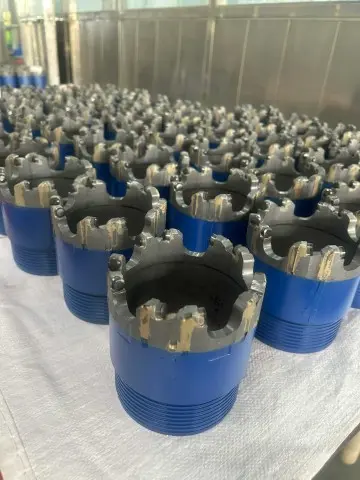
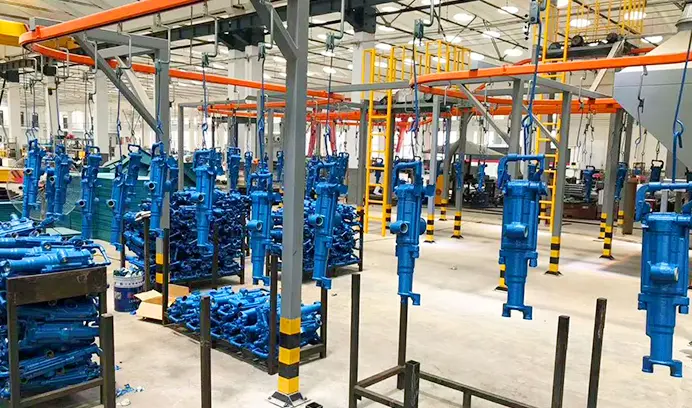
The transition from low-tech manufacturing to Factory 4.0 has transformed Chinese rock drilling tool production. At Shandong Kat Drilling Tools, the application of computerized manufacturing systems ensures that every tool is built to exact specifications. Below are the key pillars of this technological advantage:
- Premium Material Selection: We exclusively utilize high-strength structural alloy steel (such as 23CrNi3Mo or 20CrNi2Mo), which offers the optimal balance of tensile strength and impact toughness.
- Advanced Carburizing Heat Treatment: Our computer-controlled gas carburization furnaces ensure a deep, uniform carbon-rich shell. This results in a surface hardness of 58-62 HRC to resist abrasive wear, while maintaining a ductile core to absorb repetitive shockwaves.
- CNC Precision Threading: Thread forms like R32, T38, T45, and T51 are machined on high-precision CNC lathes to guarantee smooth torque transmission and prevent premature binding or stripping.
- Smart Quality Control: Automated ultrasonic flaw detection and 3D coordinate measuring machines (CMM) ensure that zero-defect shipments reach Algiers.
Accelerate Your Drilling Project in Algiers Today
Get direct factory quotes, custom technical consultation, and global logistical support for your specific geology.
Send Inquiry Now4. Local Application Scenarios: Matching Tools to Algerian Geologies
To maximize efficiency in the Algerian market, tools must be matched to specific local geologies:
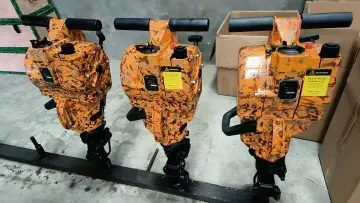
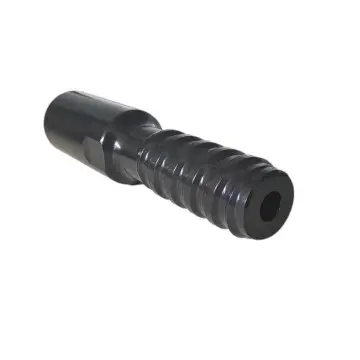
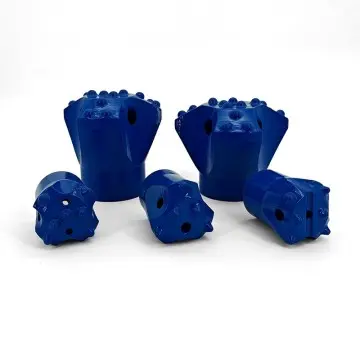
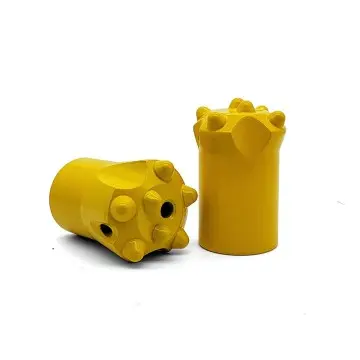
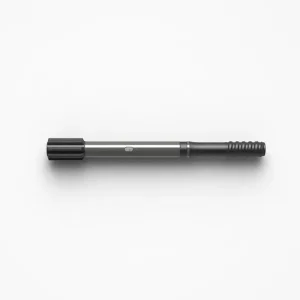
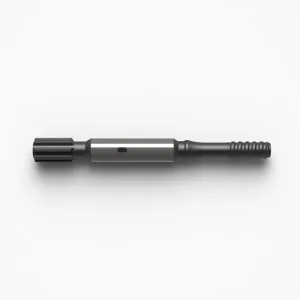
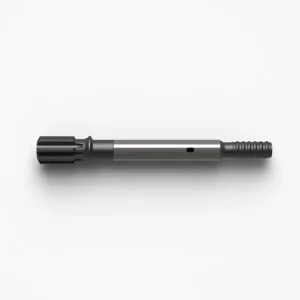
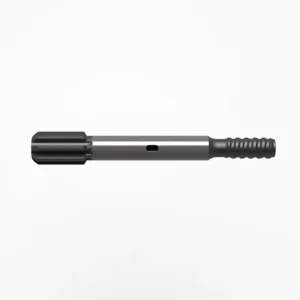
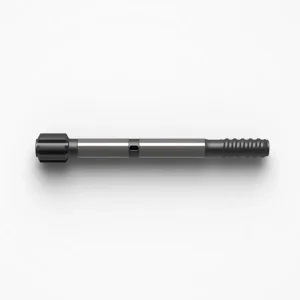
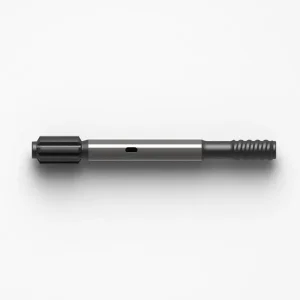
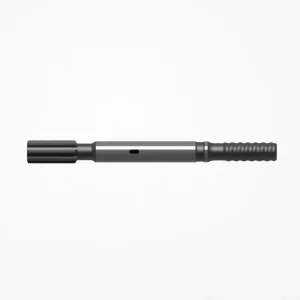
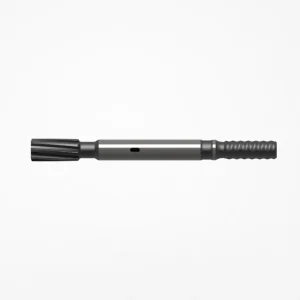
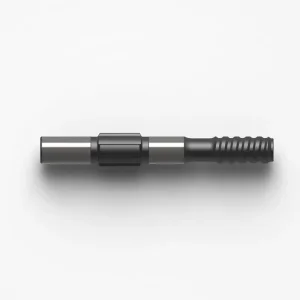
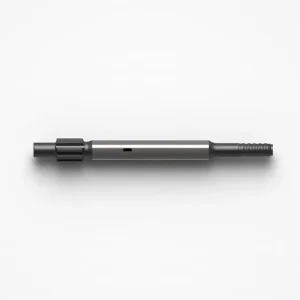
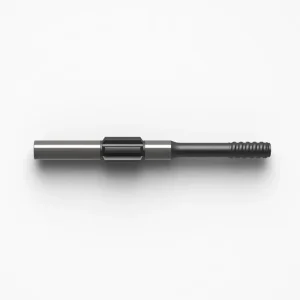
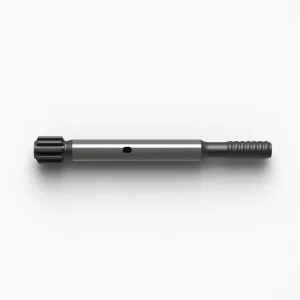
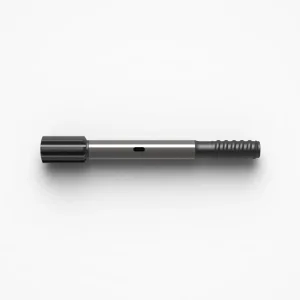
- Tell Atlas Infrastructure Projects: For metropolitan tunneling and road grading near Algiers and Constantine, top-hammer drilling rigs utilizing Sandvik or Epiroc drifters are dominant. Here, high-quality shank adapters (such as HLX5 and COP1838 series) are paired with premium R32/T38 button bits to manage rapid directional drilling through fractured limestone.
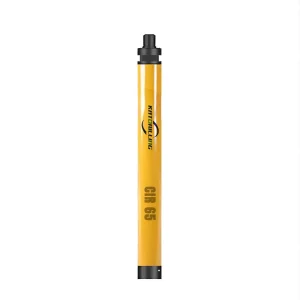
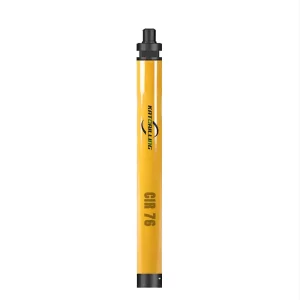
- Saharan Water Well Drilling: Deep well drilling demands low-to-medium air pressure DTH hammers (such as the CIR65, CIR70, or CIR76). These hammers are engineered to maintain high blow frequency even when operating with restricted air volumes or contaminated water, protecting the rig’s compressor system.
- Mining Operations in Sétif & Tébessa: Open-pit phosphate and iron ore operations rely on continuous bench drilling. Heavy coupling sleeves and heavy-duty shank adapters are required to sustain round-the-clock shift demands without thread deformation.
5. Future Trends: Toward Smart, Low-Emission Drills
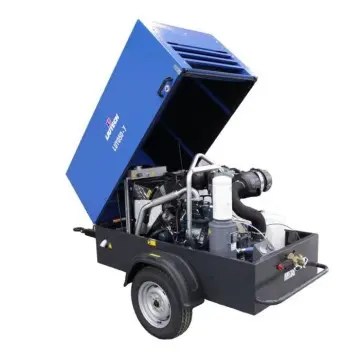
The rock drilling sector is moving rapidly towards automation and reducing fuel consumption per meter. Modern hydraulic rigs utilize electronic sensors to dynamically adjust impact energy based on rock hardness. To prevent premature wear under these fluctuating loads, drill string components must be manufactured with precise geometric tolerances. Additionally, reducing weight while maintaining structural strength helps decrease fuel consumption in diesel-powered portable compressors, aligning with global efforts to lower emissions in industrial projects.