Choosing the best Air Rock Drill begins with the rock, not the catalogue.
A hard, fractured granite face demands different impact energy than softer limestone. Hole diameter, drilling depth, air pressure, and shift length also change the decision. The USGS Mineral Commodity Summaries 2025 reports continued large-scale production across iron ore, copper, gold, and industrial minerals. That activity keeps drilling productivity under close operational pressure. The IEA’s Global Critical Minerals Outlook 2024 also shows strong future demand for minerals supporting electrification. More extraction means more attention to equipment efficiency, reliability, and worker exposure.
Rock-mechanics authority Dr. Evert Hoek has stated, “Rock masses are never homogeneous.” That warning matters underground. A drill performing well in one heading may struggle beside it. Review penetration rate, bit wear, vibration, air consumption, and maintenance access under actual site conditions. Do not rely only on advertised impact force. It can mislead.
Look closely at the operator’s hands.
A practical comparison should include the drill’s weight, throttle control, muffler design, and compatibility with water-injection or dust-suppression systems. NIOSH research consistently links respirable crystalline silica exposure with serious occupational lung disease, making dust control a selection requirement rather than an optional feature. ISO 19296:2018 also provides a useful safety framework for mobile mining machinery.
Field experience still matters. Record performance across several shifts, including cold starts, wet holes, blocked air lines, and worn bits. That evidence is imperfect, but it is more valuable than a polished brochure. The best Air Rock Drill balances penetration, operator control, serviceability, and total operating cost. Sometimes, the fastest drill is not the cheapest one.
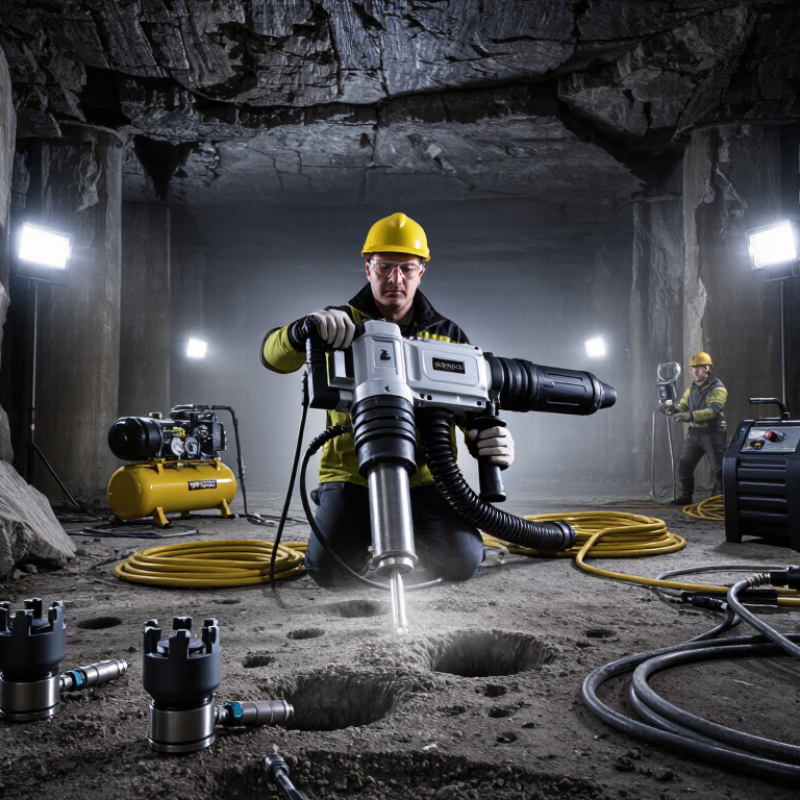
Choosing the best air rock drill for mining begins with the worksite, not the catalog. Define the required hole diameter, depth, angle, and daily drilling hours. Check the compressor’s working pressure and airflow at the drill, not only its rated output. A pressure drop through long hoses can quietly reduce drilling speed. It happens often.
Rock conditions matter just as much. Measure hardness when possible, and note whether the rock is abrasive, fractured, wet, or heavily layered. Hard granite may demand strong impact energy and durable drill steels. Soft, broken ground may need better control to prevent jamming and unstable holes. Water can also affect flushing, visibility, and operator safety. Field experience shows that a drill suited to dry rock may perform poorly underground.
Consider the operator’s real working position. A heavy handheld drill becomes exhausting during overhead work or repeated collaring. Check vibration, handle design, noise exposure, and access around the face. Match the drill to the mine’s maintenance skills and available spare parts. I have seen equipment fail because air filters were neglected, not because the design was weak. A short site trial is valuable. Record penetration speed, air consumption, bit wear, and stoppage frequency. These results may challenge the original selection, which is useful. A specification sheet cannot fully predict fractured rock, changing moisture, or inconsistent compressor performance.
Choosing the best air rock drill for mining starts with the working face, not the catalog. Different drill types suit different ground conditions, hole depths, and operator positions. A handheld jackhammer works well for short holes, scaling, and secondary breaking in confined areas. It is portable and responsive, but vibration and operator fatigue can become serious concerns during long shifts.
For vertical or inclined holes, a pneumatic sinker drill offers practical control and steady penetration. It fits small underground headings, raise preparation, and limited-access sites. A stoper drill is better for upward drilling in narrow veins or overhead stoping. Its compact frame helps maintain alignment where larger equipment cannot fit.
For long, accurate holes, a pneumatic drifter mounted on a feed system is usually more suitable. It supports production drilling, but requires a stable platform and adequate air volume.
Selection should include rock hardness, fracture patterns, hole diameter, drilling angle, and compressor performance. Field crews should compare real penetration rates, not only advertised figures. Wet, dusty headings can expose weak seals quickly. Regular lubrication, hose inspection, and filter maintenance protect both output and service life. In practice, the lightest drill is not always the best choice. A small tool may feel efficient, yet stall in dense rock and waste an entire shift. Noise, vibration, and available ventilation also deserve attention. These details are easy to overlook. Experienced supervisors often test one drill in the actual heading before approving wider deployment.
When choosing an air rock drill for mining, start with performance specifications, not advertised power alone. Air pressure and air consumption directly affect impact strength, penetration, and compressor workload. Check the rated pressure against the mine’s actual supply at the drill face. Pressure loss through long hoses can quietly reduce performance. Air consumption matters just as much. An oversized drill may demand more air than the compressor can deliver steadily. That creates uneven hammering, slower holes, and unnecessary energy costs. Measure these values during a real shift, not only in a workshop.
Impact frequency, impact energy, rotation speed, and torque work together. High impact energy helps fractured rock, while controlled rotation supports straighter holes. Too much rotation can wear bits quickly in abrasive formations. Match the drill to hole diameter, depth, rock hardness, and the required drilling angle. Penetration rate is useful, but it can mislead. Record completed meters per operating hour, including bit changes and stoppages. Real productivity is rarely the catalog figure. That distinction is easy to miss.
Weight, vibration, and feed compatibility also determine practical drilling efficiency. A lighter tool may improve handling, yet it can feel unstable at high impact levels. Look for vibration control, accessible lubrication points, and durable hose connections. These details reduce fatigue and unplanned downtime underground. Noise and exhaust conditions deserve measurement. Operators should test the drill with common bits and actual rock samples before purchase. I would not trust one impressive test hole. Compare several shifts, because real rock is inconsistent. Maintenance records should confirm seal life, valve wear, and service intervals.
In underground mining, an air rock drill should fit the operator, not force awkward movements. Check its weight, balance, handle shape, and trigger position before purchase. Hold it at chest height for several minutes. Small discomfort can become serious fatigue during a long shift. A lighter drill is not automatically safer. Poor balance may increase wrist strain and reduce control. Vibration deserves careful attention. Ask for measured vibration data, then compare it with your site’s exposure limits and safety procedures. Short demonstrations can hide problems.
Durability depends on the rock, drilling method, and working environment. Dust, water, and dropped tools quickly expose weak housings and poor seals. Examine the air inlet, hose coupling, exhaust path, and moving joints. Look for replaceable wear parts. Maintenance should be practical, not theoretical.
Operators need clear lubrication instructions, inspection intervals, and easy access to service points. Keep a simple maintenance log. It may reveal repeated air leaks or unusual noise before failure. Still, manuals sometimes assume cleaner conditions than real mine faces.
Operator safety also depends on the complete setup. A competent supervisor should verify training, guarding, hose restraints, and emergency procedures. Connect air hoses securely, and inspect them before every shift. Wet drilling can reduce airborne dust, but it does not remove the need for suitable respiratory protection. Eye, hearing, hand, and foot protection remain essential. Production pressure can shorten inspections. That is where judgment often fails. A practical trial with actual operators may reveal issues that a specification sheet misses.
Choosing the best air rock drill begins with the real cost, not the purchase price. A low-cost drill may consume more air, wear faster, and require frequent repairs. Calculate drilling output, compressor fuel, bits, hoses, and downtime together. Ask how many productive hours the drill can deliver each month.
Air supply must match the drill’s working requirements. Check pressure and airflow at the drill, not only at the compressor. Long hoses, narrow fittings, leaks, and dirty filters can reduce performance. A drill that needs 90 cubic feet per minute may struggle when the compressor provides less under load. Measure it twice. Moisture also matters. Water in the air line can damage internal parts and reduce lubrication.
Service support often decides whether equipment earns money or waits underground. Confirm spare-part availability, technician response times, training, and repair procedures before ordering. Examine the chuck, throttle, exhaust path, and vibration controls during a practical trial.
Ask operators about handling in wet, confined headings. Their feedback may reveal problems that specifications hide. No selection is perfect. A slightly heavier drill could last longer, while a lighter model may reduce fatigue during repeated drilling. Review service records after the first weeks, because early field evidence can challenge the original choice.
Define hole diameter, depth, angle, and daily drilling hours. Check airflow and working pressure at the drill. Long hoses can reduce pressure quietly. It happens often.
Hard, abrasive rock may require strong impact energy and durable drill steels. Fractured rock needs better control. Wet ground can reduce visibility and affect flushing.
No. Weight, balance, handle shape, and trigger position all matter. Hold the drill at chest height for several minutes. Small discomfort becomes fatigue.
Request measured vibration data, not only short demonstrations. Compare it with site exposure limits and safety procedures. Noise protection remains necessary.
Choose accessible service points and replaceable wear parts. Check the air inlet, hose coupling, exhaust path, and moving joints. Keep a simple maintenance log.
Run a short trial with actual operators and real rock. Record penetration speed, air consumption, bit wear, and stoppage frequency. The results may challenge the original choice.
Inspect air hoses, connections, restraints, guards, and emergency equipment. Confirm operator training. Eye, hearing, hand, foot, and respiratory protection may be required.
Not always. Water, dust, fractured ground, and unstable holes can change performance. A specification sheet cannot predict every mine face. Reconsider the choice when conditions change.
Choosing the best Air Rock Drill begins with a clear understanding of the mining environment. Evaluate the rock’s hardness, abrasiveness, fracture patterns, drilling depth, hole diameter, and available working space before selecting equipment. Different drill types suit different applications, from handheld tools for flexible face work to heavier units for stable, high-output production. Matching the drill design to the geological conditions helps improve accuracy, productivity, and tool life.
Key performance factors include impact energy, rotation speed, air consumption, drilling capacity, and the ability to maintain consistent power under demanding conditions. Operator comfort is equally important, so consider vibration control, weight, handle design, noise management, and safe operating features. A durable structure, accessible maintenance points, reliable replacement parts, and responsive technical service can reduce downtime. Finally, compare the purchase price with long-term operating costs, including compressed-air requirements, consumables, maintenance, and expected service life, to make a practical and cost-effective choice.

KAT DRILLING