
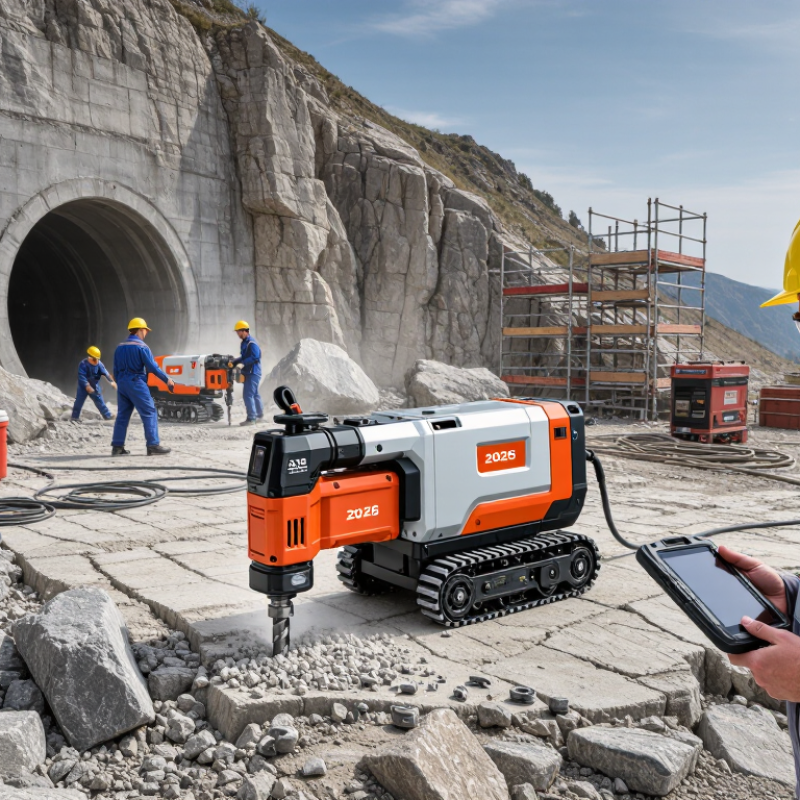
How to Choose an Electric Rock Drill Machine in 2026?

Time:2026-10-23 Author:Sienna
0%

Choosing an Electric Rock Drill Machine in 2026 requires more than comparing motor power or purchase price. The right machine must fit the rock, worksite, drilling depth, and operator’s daily routine. Granite, limestone, and fractured ground do not respond in the same way. Neither do narrow tunnels and open construction sites.

Dr. Lars Holmlund, a drilling engineer with field experience in hard-rock projects, once said, “A drill is judged at the face, not in the showroom.” That point remains easy to overlook. A compact machine may look efficient, yet struggle under continuous load. A powerful model may finish holes quickly, but create unnecessary vibration and fatigue. Battery capacity, impact energy, dust control, cooling, and tool compatibility deserve equal attention. Small details matter.

This guide examines those practical factors before discussing brands and specifications. It considers runtime beside charging time. It weighs portability against drilling stability. It also looks at maintenance access, noise, service support, and total operating cost. These issues can decide whether an Electric Rock Drill Machine performs reliably after months of use.

Some choices are not obvious. More power is not always better. Higher voltage can increase weight. A cheaper machine may become expensive through frequent bit replacement. That is the uncomfortable part. Product brochures rarely show muddy floors, cold batteries, awkward angles, or rushed operators. Real experience does. Readers should question every specification and compare it with actual site conditions. A careful decision may take longer, but it can prevent poor performance, avoidable downtime, and needless replacement.

How to Choose an Electric Rock Drill Machine in 2026?

Classify Electric Rock Drills by Power, Impact Energy, and Drilling Method

How to Choose an Electric Rock Drill Machine in 2026?

Classify electric rock drills by power, impact energy, and drilling method. Light handheld models usually provide 0.8–2.5 kW and 3–12 joules of impact energy. They suit small anchor holes, repair work, and soft to medium rock. Medium machines often deliver 2.5–7.5 kW and 12–30 joules. They handle quarry faces and deeper construction holes more confidently. Heavy electric or electro-hydraulic systems may exceed 7.5 kW and 30 joules. Their weight demands stable platforms and stronger power supplies.

Impact energy is not everything. Top-hammer drilling transfers repeated blows through a steel rod, making it useful for short and medium holes. Down-the-hole drilling places the hammer near the bit, reducing energy loss in deeper holes. Rotary drilling relies more on torque and feed pressure than impact. It can perform better in fractured formations, but it may struggle against very hard rock. Field tests matter.

The International Energy Agency’s Global Critical Minerals Outlook 2024 reported nearly 30% growth in lithium demand during 2023. Expanding mineral projects may increase demand for reliable electric drilling equipment. Yet, selecting power only from a catalog is risky. Check voltage stability, cable length, dust protection, vibration exposure, and service access. The European Commission’s 2024 workplace safety guidance also emphasizes controlling hand-arm vibration. A smaller drill may be safer and faster underground. Sometimes, higher power simply wastes energy.

Match Rock Type and Hole Diameter with 20–50 mm Bit Capacity

How to Choose an Electric Rock Drill Machine in 2026?

A 20–50 mm bit capacity sounds versatile, but diameter alone does not select the right machine. Match the bit to rock strength, abrasivity, fracture patterns, and drilling depth. For soft limestone, weathered sandstone, or shallow anchor holes, 20–30 mm bits usually reduce energy demand and improve handling. Dense granite, basalt, or compact quartzite may require 32–50 mm bits, stronger impact energy, and slower feed pressure. The wrong match creates overheated motors, wandering holes, and premature bit wear.

Use the USGS Mineral Commodity Summaries 2025 as useful context: U.S. crushed stone production remained near 1.5 billion metric tons, showing how widely variable aggregate conditions can be. The report does not choose your drill, however. FHWA’s Rock Slopes guidance stresses site investigation, discontinuities, and excavation control, which are equally important for portable drilling. Check the machine’s rated performance at your target diameter, not only its maximum capacity. A 50 mm rating may describe ideal laboratory conditions. Real rock is less polite. Keep a smaller bit option for fractured zones, and confirm available voltage, cable length, dust control, and operator load before purchase. In practice, choosing the largest bit first is often the mistake. The better decision may be slower, narrower, and more controlled.

How to Choose an Electric Rock Drill Machine in 2026? - Match Rock Type and Hole Diameter with 20–50 mm Bit Capacity

Practical selection guide for electric rotary-hammer and rock-drilling applications

Rock type Typical UCS range* Abrasiveness Recommended hole diameter Suitable bit type Preferred drilling mode Useful machine characteristics Selection note
Soft limestone 20–70 MPa Low to medium 20–32 mm Carbide-tipped SDS-max or equivalent hammer bit Rotary hammer with impact Moderate impact energy, variable speed, dust extraction Prioritize clean evacuation and a clutch for mixed layers or voids.
Sandstone 30–150 MPa Medium to high 25–40 mm Cross or four-cutter carbide bit Rotary hammer with impact; flushing recommended High dust-control capacity, overload protection, replaceable brushes or serviceable motor Use a slower feed rate in highly abrasive quartz-rich sandstone.
Shale and mudstone 10–100 MPa Low to medium 20–35 mm Sharp carbide-tipped bit with open flute design Rotary hammer with controlled impact Variable speed, low-vibration handle, reverse function for bit release Reduce feed pressure to limit wedging, jamming, and hole collapse.
Granite 100–300 MPa High 25–45 mm Heavy-duty carbide cross bit or segmented diamond core bit Impact drilling for holes; wet diamond coring for precise openings High impact energy, thermal overload protection, auxiliary handle, low-vibration design For continuous coring, confirm that the machine supports water cooling and the required core barrel.
Basalt 150–350 MPa High 25–45 mm Heavy-duty carbide bit; diamond core bit for accurate holes Impact drilling or wet diamond coring Strong impact mechanism, sealed bearings, effective cooling, vibration reduction Select the upper part of the machine’s duty range for repeated drilling.
Quartzite 150–300 MPa Very high 25–40 mm Premium carbide bit or diamond-impregnated core bit Wet diamond coring preferred for long or precise holes High thermal capacity, water management, overload protection, rigid side handle Avoid excessive pressure; abrasive dust and heat can rapidly shorten bit life.
Concrete with aggregate 20–80 MPa Medium to high 20–50 mm Four-cutter carbide bit or diamond core bit Rotary hammer for small holes; wet or dry coring for larger openings Safety clutch, variable speed, dust extraction or water feed, depth stop Check for reinforcement before drilling and use a four-cutter bit where rebar may be encountered.
Weathered or fractured rock Variable; commonly 10–100 MPa Variable 20–35 mm Carbide bit with reinforced head and efficient flutes Controlled rotary hammer drilling Adjustable speed, torque limiting clutch, compact body, good bit retention Use shorter passes and withdraw the bit regularly to clear loose material.
20–32 mm holes
Suitable for anchors, small conduit passages, light-duty fixing, and sampling holes. A rotary hammer with a carbide bit is usually the most efficient option.
32–45 mm holes
Require a higher-duty machine, stable auxiliary handle, effective dust control, and a bit system rated for the selected diameter.
45–50 mm holes
Confirm the machine’s continuous-duty rating. For accurate or deep openings, diamond coring may provide better control than impact drilling.

*UCS values are broad reference ranges because strength varies with moisture, grain size, weathering, bedding, and testing method. Always verify the machine’s published maximum bit diameter, impact energy, duty cycle, electrical supply, and required bit-shank compatibility before purchase.

Compare 1.5–3.0 kW Motors, RPM, and Impact Rates for Productivity

Choosing an electric rock drill in 2026 starts with matching motor power to the job, not selecting the highest number. A 1.5 kW motor suits small anchor holes, brickwork, and occasional repairs. It is easier to control and usually places less demand on site power. A 2.0–2.4 kW model offers a practical balance for repeated concrete drilling. For dense rock or larger holes, a 3.0 kW motor can maintain stronger output, but it adds weight, heat, and energy use.

RPM needs careful interpretation. No-load speed may look impressive, yet the loaded speed matters more when the bit meets hard stone. Lower RPM often improves control with large-diameter bits. Higher RPM can help smaller bits cut clean masonry faster. Impact rate also affects productivity. Around 2,000–3,000 impacts per minute may feel controlled on fragile material. Rates near 3,500–5,000 impacts per minute can improve penetration in tougher concrete, provided the bit and clutch are suitable. Real performance depends on bit quality, operator pressure, and ventilation.

Tips: Test the drill with your intended bit before buying. Check speed under load, vibration, cable length, and restart behavior. Do not trust specifications alone. I have found that a lighter 2.2 kW drill can outperform a heavier 3.0 kW tool during long shifts. That result is not universal, and it deserves verification on your material. Pause when the housing becomes unusually hot. Steady pressure usually works better than forcing the machine.

Evaluate Voltage, Battery Runtime, IP Ratings, and Jobsite Safety

How to Choose an Electric Rock Drill Machine in 2026?

Voltage affects drilling power, heat, and battery demand. A higher voltage may handle dense concrete more confidently, but it can add weight. Match voltage to the material, hole diameter, and daily workload. Do not choose the largest battery automatically. A 6.0 Ah pack may last longer, yet it can make overhead drilling tiring. Check the stated runtime under load, not only the ideal laboratory figure. Rock, dust, and frequent starts reduce actual endurance.

IP ratings deserve careful attention on rough jobsites. The first digit shows protection against solid particles, while the second indicates water resistance. A higher rating helps near wet masonry, but it does not make the drill waterproof. Keep the tool away from standing water. Inspect seals, vents, and battery contacts before every shift. Small damage can become a serious failure.

Jobsite safety depends on more than the machine. Use eye protection, hearing protection, gloves suited to vibration, and a properly fitted dust mask. Secure loose clothing and keep both hands on the drill during binding. Let the bit stop before clearing debris. I once underestimated fatigue during a long overhead task; the drill remained capable, but my control declined. That mistake changed my checklist. Choose a model with manageable balance, visible battery status, overload protection, and a serviceable emergency stop routine. Read the manual, then verify its instructions against real site conditions.

How to Choose an Electric Rock Drill Machine in 2026?

Evaluate voltage, battery runtime, IP ratings, and jobsite safety before selecting a cordless rock drill.

Voltage and Energy

Higher-voltage platforms can support larger battery packs and higher sustained power. Battery energy is calculated as voltage × amp-hours.

Runtime Estimate

Estimated active drilling time assumes a constant 600 W input load: runtime in hours = battery watt-hours ÷ 600. Actual runtime varies with rock hardness, bit size, temperature, and duty cycle.

IP Rating

IP54 provides limited dust ingress protection and protection against water splashes. IP65 is dust-tight and protected against water jets. Verify the complete tool and battery rating.

Jobsite Safety

Use eye, hearing, respiratory, hand, and foot protection as required. Inspect the bit and battery, secure the work area, control dust, and use an RCD/GFCI where electrical conditions require it.

Battery examples shown are representative capacity calculations: 18 V × 5 Ah = 90 Wh, 36 V × 8 Ah = 288 Wh, and 54 V × 9 Ah = 486 Wh. IP classifications refer to IEC 60529 terminology.

Verify Dust Control, Vibration Levels, Service Life, and Total Cost

How to Choose an Electric Rock Drill Machine in 2026?

Dust control should be verified at the cutting point, not only in a showroom. OSHA’s respirable crystalline silica standard sets a 50 micrograms/m³ limit over an eight-hour shift. It also defines 25 micrograms/m³ as the action level. Ask for independent test results under dry, hard-rock conditions. Water delivery, sealed shrouds, and compatible extraction systems matter. A clean-looking drill can still create a dangerous cloud.

Vibration needs equal attention. UK HSE guidance identifies 2.5 m/s² A(8) as the exposure action value and 5 m/s² as the daily limit. Compare measured vibration, trigger comfort, and drilling time per hole. Laboratory figures may disappoint in uneven rock. They often do. Operators should record actual daily exposure, including repositioning and idle handling. One overlooked hour can change the risk assessment.

Service life depends on duty cycle, maintenance access, and spare-part availability. Check gearbox ratings, bearing replacement intervals, ingress protection, and cable durability. ISO 5349-1 provides methods for evaluating hand-transmitted vibration, but it does not promise a fixed machine lifespan. Calculate total cost using energy, bits, filters, water, repairs, labor, and downtime. A lower purchase price may hide expensive stoppages. I would test two machines on the same rock face before approving a fleet purchase, because supplier claims rarely show every failure.

FAQS

How should electric rock drills be classified by power?

Light handheld drills usually provide 0.8–2.5 kW. They suit anchor holes, repairs, and soft to medium rock. Medium machines deliver about 2.5–7.5 kW for deeper construction holes. Heavy systems may exceed 7.5 kW and need stable platforms.

Does higher impact energy always mean better drilling?

No. Light models may offer 3–12 joules of impact energy. Medium models often provide 12–30 joules. More power can waste energy when the rock is softer. Sometimes, smaller is faster.

Which drilling method suits different rock conditions?

Top-hammer drilling works well for short and medium holes. Down-the-hole drilling places the hammer near the bit. This can reduce energy loss in deeper holes. Rotary drilling depends more on torque and feed pressure.

What should operators check before choosing a drill?

Check voltage stability, cable length, dust protection, and service access. Measure vibration during actual drilling. Consider the platform, hole depth, and rock hardness. Catalog figures are not enough.

How can dust control be verified?

Test dust at the cutting point, not only inside a showroom. Water delivery, sealed shrouds, and extraction systems are important. Dry, hard-rock testing gives more realistic results. A clean machine can still create a dangerous cloud.

What vibration levels deserve attention?

Workplace guidance commonly uses 2.5 m/s² as an exposure action value. A daily limit may reach 5 m/s². Record drilling, repositioning, and idle handling time. One overlooked hour can change the assessment.

How can a drill’s service life be estimated?

Review the duty cycle, gearbox rating, bearings, and ingress protection. Check cable durability and replacement intervals. Spare-part access also matters. Service life is never perfectly predictable.

How should total ownership cost be calculated?

Include electricity, bits, filters, water, repairs, labor, and downtime. A cheaper purchase may cause costly stoppages. Test two machines on the same rock face. Supplier claims rarely show every failure.

Conclusion

Choosing the right Electric Rock Drill Machine in 2026 requires more than comparing headline power. Start by classifying machines according to motor output, impact energy, and drilling method, then match the tool to the rock type and intended hole size. Models supporting 20–50 mm bits can cover many construction, maintenance, and geological tasks, but harder materials may require higher impact performance and more durable components. Compare motors in the 1.5–3.0 kW range, along with rotation speed and impact rate, to balance drilling productivity with energy consumption.

Practical operating conditions are equally important. Check voltage compatibility, battery runtime for cordless equipment, IP protection ratings, and built-in safety features before purchase. Effective dust control, manageable vibration, and a long service life can improve operator comfort and reduce downtime. Finally, evaluate maintenance access, replacement-part availability, energy costs, and expected workload to calculate the total cost of ownership rather than focusing only on the initial purchase price.

Sienna

Sienna

Sienna is a skilled marketing professional with a deep expertise in our company’s core products and services. With a passion for innovation and detail, she plays a pivotal role in crafting insightful blog posts that not only highlight the unique features of our offerings but also provide valuable......