A Hydraulic Rock Drilling Machine is judged where the bit meets the rock: by penetration rate, hole accuracy, fuel use, and wear. On a quarry bench, a few millimeters of drift can affect the next operation. Catalog claims alone cannot show how a rig performs across changing formations or long shifts.
The International Energy Agency’s Global Critical Minerals Outlook 2024 reported that lithium demand rose by 30% in 2023; demand for nickel, cobalt, graphite, and rare earths also grew. That wider mining trend raises practical questions about equipment capacity and reliability. IEA Executive Director Fatih Birol has said, “There is no energy transition without critical minerals.” The observation concerns mineral supply, not a particular drill maker, but it helps explain why productive extraction equipment matters.
This guide examines Chinese manufacturers through measurable criteria: impact energy, rotation torque, feed force, flushing options, carrier compatibility, parts availability, and service support. Buyers should compare test conditions carefully. A quoted drilling speed may not reflect the same rock hardness, bit diameter, or shift length. Not just price. Warranty terms and local technician access can shape total operating cost just as much. Still, published specifications do not replace field trials; that is an important limitation. The following overview introduces manufacturers and the evidence buyers can use to assess them, without treating any single brand as suitable for every site.
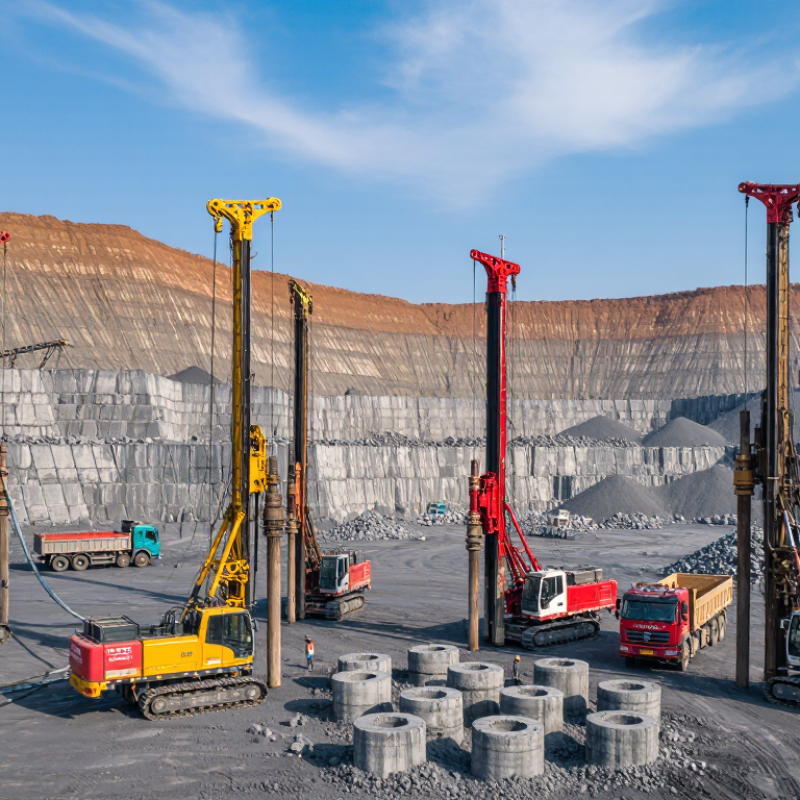
Hydraulic rock drilling machines convert fluid pressure into controlled impact and rotation. They are used to make boreholes in hard rock for tunneling, quarrying, and foundation work. A steady drilling rate matters, but so does the hole’s direction. Even a small deviation can complicate later work. Not glamorous, but important.
The power unit supplies pressurized oil through hoses to the drill mechanism. Inside the drilling head, a hydraulic piston delivers repeated blows to the drill steel, while a rotation motor turns the bit. A feed system presses the tool against the rock and advances it as the hole deepens. These parts must work together. If feed pressure is excessive, the bit can bind or wear unevenly; too little pressure may waste impact energy. The flushing system carries cuttings out of the borehole, often using air or water, depending on site conditions. Filters, seals, and cooling components also deserve attention, since contaminated oil or overheating can shorten service life. The practical details vary. Operators should check the machine’s specifications against rock hardness, hole diameter, and required depth. A mismatch is easy to overlook. Regular inspection helps, though it cannot compensate for poor setup or unsuitable tooling.
| Machine Type | Primary Purpose | How It Works | Core Components | Common Applications | Key Selection Considerations |
|---|---|---|---|---|---|
| Hydraulic drifter | Provides percussive energy and rotation to a drill bit for hard-rock drilling. | Hydraulic pressure drives a piston that repeatedly strikes the drill steel; rotation aligns the bit for successive impacts. | Hydraulic piston, rotation motor, flushing connection, drill-steel coupling, wear parts, and seals. | Underground development, tunneling, and surface drilling rigs. | Match impact energy, rotation characteristics, flushing requirements, and drill-steel dimensions to the rock and rig. |
| Top-hammer drilling rig | Drills holes using a hydraulic drifter mounted on the feed system, with impact energy transmitted through drill rods. | The drifter strikes and rotates the rod string while the feed system advances the drill toward the rock face. | Drifter, boom or feed beam, hydraulic power system, rod handling equipment, drill rods, and control system. | Quarrying, construction excavation, bench drilling, and underground mining. | Consider hole diameter and depth, access and reach, feed length, ground conditions, and required mobility. |
| Down-the-hole (DTH) rig | Drills comparatively straight holes by positioning the percussive hammer near the bit. | Compressed air powers a hammer located down the hole; the rig supplies feed and rotation, and air helps clear cuttings. | DTH hammer, bit, drill pipes, rotary head, feed system, compressor, and air hoses. | Quarries, water-well drilling, foundation work, and surface production drilling. | Check compressor capacity, hole diameter and depth, hammer and bit compatibility, and site access. |
| Hydraulic rotary drilling rig | Creates holes mainly through continuous rotary cutting or crushing rather than repeated top-hammer impacts. | A hydraulic rotary head turns the drill string and cutting tool while the feed system applies thrust. | Hydraulic rotary head, drill string, cutting tool, feed mechanism, power unit, and fluid or cuttings-management system. | Selected geotechnical, foundation, and exploration drilling tasks, depending on tool and ground conditions. | Evaluate the formation, drilling method, tool compatibility, required hole quality, and cuttings-removal method. |
| Hydraulic power and control system | Supplies and regulates hydraulic energy for drilling, feed, rotation, boom movement, and auxiliary functions. | A pump delivers pressurized fluid through valves and lines to hydraulic motors and cylinders; controls regulate flow and pressure. | Hydraulic pump, reservoir, filters, valves, hoses and fittings, cylinders, motors, and cooling components. | Integral to hydraulic drilling rigs and equipment. | Review operating pressure and flow requirements, filtration, heat management, hose protection, and service access. |
| Feed system | Positions the drill and applies controlled thrust during drilling. | A hydraulic cylinder or chain-driven arrangement moves the drifter or rotary head along a feed beam. | Feed beam, carriage, cylinder or chain drive, guides, wear strips, and feed controls. | Top-hammer and rotary rigs; configurations vary by rig design. | Assess feed length, available thrust, alignment, wear protection, and the intended drilling orientation. |
| Flushing system | Removes drill cuttings from the hole and helps keep the bit and hole clear. | Air, water, or a combination is routed through the drilling assembly and discharged at or near the bit. | Flushing passages, hoses, couplings, air or water supply, and dust-control equipment where fitted. | Rock drilling across surface, underground, and construction applications. | Choose a method suited to the drilling system, geology, site rules, water availability, and dust-control needs. |
It creates boreholes in hard rock for tunneling, quarrying, and foundation work. Hole direction matters. Even slight deviation can complicate later construction.
Pressurized oil powers a hydraulic piston and a rotation motor. The piston strikes the drill steel repeatedly. The motor turns the bit through the rock.
The feed system pushes the tool against the rock as the hole deepens. Excessive pressure may bind the bit or cause uneven wear. Too little pressure wastes impact energy.
It removes rock cuttings from the borehole using air or water. The best choice depends on site conditions, rock behavior, and dust-control needs. Conditions change.
Inspect filters, seals, hoses, cooling parts, and hydraulic oil regularly. Contaminated oil can damage components. Overheating can shorten service life. Small leaks still matter.
Compare rock hardness, hole diameter, required depth, torque, feed force, and operating weight. Request rock samples when possible. Showroom figures may not match fractured limestone or hard granite.
Review pressure tests, weld inspections, component records, and trial-drilling results. Inspect hose routing and service access during a live demonstration. Missing records deserve caution.
The supplier should explain maintenance intervals, spare-part lead times, warranty limits, and technician training. Clear manuals and responsive service reduce downtime. Still, no factory gets every detail right.
Hydraulic Rock Drilling Machine is essential for creating accurate, efficient holes in challenging rock formations across mining, construction, quarrying, tunneling, and foundation projects. Powered by hydraulic systems, these machines combine a drilling boom, hydraulic power unit, rotary or impact mechanism, control system, drill rod, and bit to deliver strong penetration, stable operation, and adaptable performance. China has developed a broad hydraulic rock drilling equipment industry supported by extensive manufacturing capacity, engineering expertise, and a wide range of product configurations.
Leading Chinese manufacturers differ in their focus, including surface or underground applications, compact designs, high-power systems, automated controls, and customized solutions for demanding working conditions. When evaluating a supplier, buyers should consider drilling performance, equipment durability, component quality, energy efficiency, operator safety, maintenance convenience, customization capability, production standards, technical support, and after-sales service. A reliable manufacturer should offer transparent specifications, consistent quality control, practical engineering guidance, and responsive support throughout the equipment’s service life.

 KAT DRILLING