Top Hammer Drill For Rock Buying Guide?

Time:2026-10-12 Author:Liam
0%

Choosing a Hammer Drill For Rock is not simply a matter of buying the highest impact rating. Rock type, hole diameter, drilling depth, vibration, and dust control all change the decision.

The U.S. Geological Survey’s Mineral Commodity Summaries 2025 reports approximately 1.5 billion metric tons of crushed stone production in the United States during 2024. That figure reflects the scale of aggregate work requiring dependable rock-breaking and drilling equipment. The report also shows why job conditions matter. Hard, abrasive stone can consume bits quickly. Weak, fractured rock can create unstable holes and uneven penetration.

Small details matter.

Rock-mechanics authority Dr. Richard L. Bieniawski described the field this way: “Rock mechanics is the theoretical and applied science of the mechanical behavior of rock and rock masses.” His statement supports a practical buying lesson. A drill should match the rock mass, not only the advertised wattage.

Safety data from the National Institute for Occupational Safety and Health also keeps respirable crystalline silica in view. Effective dust extraction, suitable work practices, and proper protective equipment should be part of the purchase decision. A powerful tool without adequate control may become expensive, tiring, and unsafe.

This guide compares impact energy, motor power, chuck systems, bit compatibility, ergonomics, cooling, and service support. It also considers corded and cordless models for construction, quarry maintenance, landscaping, and controlled DIY work. Some specifications look impressive on a product page. They may perform differently against dense granite, wet limestone, or layered sandstone.

That is the uncomfortable part. No single Hammer Drill For Rock suits every site. The best choice begins with honest testing, realistic workload estimates, and a willingness to question marketing claims.
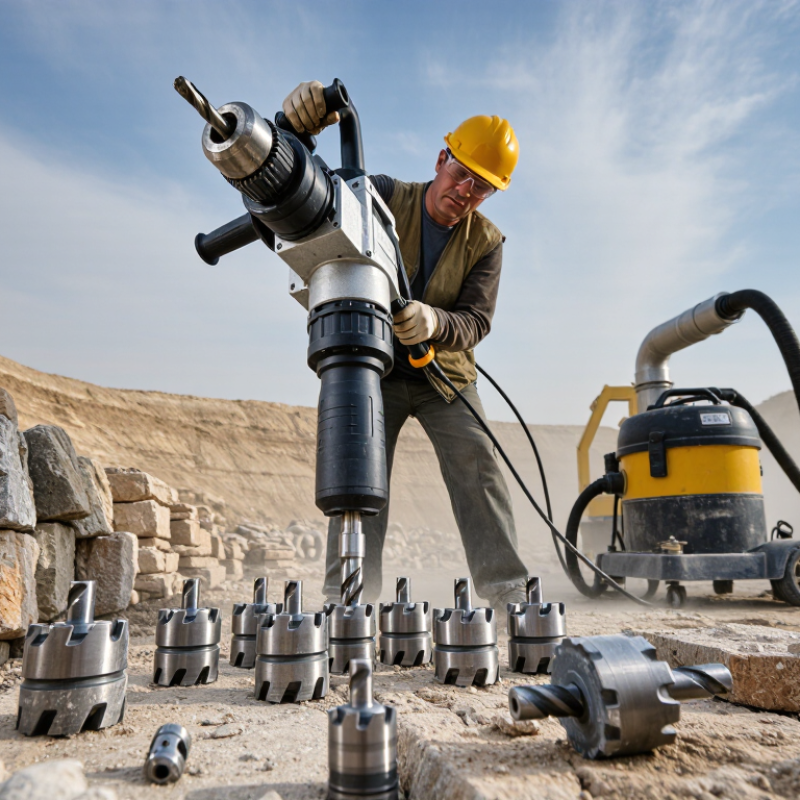
Top Hammer Drill For Rock Buying Guide?

Understanding Top Hammer Drills and Their Rock-Boring Applications

Top hammer drills deliver percussion through the drill string, while rotation keeps the bit cutting. This design suits shallow, straight holes in competent rock. Common applications include quarry benching, anchor holes, road construction, and small-scale exploration.

Rock type changes the buying decision. Dense granite demands higher impact energy and rigid tooling. Softer limestone may reward faster rotation and controlled feed pressure. Abrasive sandstone can wear buttons quickly. I look for adjustable percussion, reliable water or air flushing, and a feed system that holds steady pressure. Hole diameter matters too. Oversized tooling increases torque, dust, and energy use. Small details become expensive.

The USGS Mineral Commodity Summaries 2024 estimated about 1.9 billion metric tons of crushed stone production in the United States during 2023. That volume reflects continuing demand for dependable rock-boring equipment. The International Energy Agency’s Global Critical Minerals Outlook 2024 also describes strong growth in mineral supply requirements, which may increase exploration drilling activity. These reports do not prove that every top hammer drill is suitable. They provide market context, not a purchasing answer.

Watch the operator’s experience. A powerful hammer can still perform badly with poor bit alignment or insufficient flushing. I would not choose only by advertised impact energy. Noise, vibration, maintenance access, and spare-tool availability deserve equal attention. My own weak point is assuming harder rock always needs more power. Sometimes, better bit selection and steadier feed control outperform brute force.

Identifying the Right Drill Type for Different Rock Conditions

Top Hammer Drill for Rock Buying Guide

Choosing a top hammer drill starts with the rock, not the advertised impact rating. On site, I inspect hardness, fractures, moisture, and borehole depth before selecting equipment. Soft limestone and weathered rock usually need moderate impact energy and higher rotation speed. Excessive force can crush the face and waste power. Match the rock.

For hard granite, basalt, or dense quartzite, choose a hydraulic or pneumatic top hammer with strong impact energy and steady feed control. Use sturdy threaded rods and a button bit designed for abrasive formations. A small rotary hammer may handle short holes, but it often struggles with deep drilling and continuous production. Hard rock also demands careful alignment. Bent rods can create vibration, poor penetration, and premature bit wear.

Fractured rock needs a different approach. Lower impact settings, slower feed pressure, and a bit with reliable gauge protection can reduce jamming. In wet ground, check corrosion resistance and provide safe water or dust-control systems. Dust changes everything. Dry drilling may need effective extraction, especially in enclosed areas. I have seen operators blame the drill when worn bits caused slow progress. That assumption is often wrong. Inspect button wear, rod threads, air pressure, and flushing performance during each shift. Manufacturer specifications matter, but field testing matters more. Rock conditions can change within one meter, so a perfect selection on paper may still require adjustment.

Comparing Key Specifications, Power Sources, and Performance Features

Top Hammer Drill For Rock Buying Guide?

Choosing a top hammer drill for rock requires more than comparing impact energy. Start with the working surface, hole diameter, and drilling depth. The U.S. Geological Survey’s Mineral Commodity Summaries 2025 reports roughly 1.5 billion metric tons of crushed stone produced in the United States during 2024. That scale reflects demanding conditions, where overheating, dust, and vibration quickly expose weak equipment.

Pneumatic drills usually deliver consistent force in quarries with reliable compressors. They are powerful, but hoses restrict movement and increase setup time. Corded electric models suit fixed work areas, provided the supply can handle their rated input. Battery models offer cleaner mobility, though runtime falls sharply in hard rock. Compare impact energy, blows per minute, chuck compatibility, cooling design, and serviceable parts. A high impact rating can mislead when the drill loses force under load.

Noise and vibration deserve equal attention. OSHA’s occupational noise limit is 90 dBA over an eight-hour shift, with a 5 dBA exchange rate. Check declared sound and vibration values against actual use, not only laboratory figures. A 2024 industry assessment of power-tool demand also highlights cordless growth, but battery convenience is not universal. My buying bias favors portability too often. On a long granite job, a heavier pneumatic tool may work faster and last longer. Specification sheets rarely reveal that uncomfortable truth.

Top Hammer Drill for Rock: Buying Guide

This comparison uses typical published specification ranges for common hammer-drill classes. SDS-plus tools suit small anchors and general masonry work, while SDS-max tools provide substantially higher impact energy for hard rock and large-diameter drilling.

Power source

Corded models provide continuous output. Cordless models improve mobility but depend on battery capacity and temperature.

Impact energy

Higher joule ratings generally improve progress in hard rock, but they also increase vibration, weight, and operator fatigue.

Performance features

Variable speed, overload protection, vibration control, and rotary-stop mode are useful for safer and more controlled drilling.

Evaluating Drill Bits, Rods, Compatibility, and Tool Durability

Top Hammer Drill For Rock Buying Guide?

Rock drilling punishes weak compatibility. The USGS Mineral Commodity Summaries 2024 estimated U.S. crushed stone production at roughly 1.5 billion metric tons in 2023. That volume reflects demanding, repetitive work. Choose bits for the formation, not the advertised diameter. Button bits suit hard, abrasive rock, while sharper profiles can cut softer formations faster. Check the bit’s carbide layout, flushing holes, and thread size. A mismatched thread may seem acceptable, then loosen under impact.

Rods require equal attention. Match shank dimensions, thread geometry, length, and impact frequency with the drill. A rod that is too flexible can bend inside a rough bore. Too rigid, and it may transfer damaging shock to the chuck. ISO 22475-1 emphasizes controlled drilling procedures and reliable sampling practices; the same discipline helps here. Keep rods straight, clean threads after every shift, and inspect for mushroomed ends. Small defects grow quickly.

Durability is not just steel hardness. It includes heat management, dust sealing, vibration control, and service access. The U.S. Mine Safety and Health Administration repeatedly identifies airborne respirable crystalline silica as a serious drilling hazard, so effective water or dust-control systems matter. Test the tool on your actual rock. Catalog ratings can mislead. I once favored a heavier drill, yet its poor balance caused faster operator fatigue. That choice looked powerful, but it was not practical. Availability of replacement rods and bits also affects long-term cost. Reliable equipment should survive the site, not merely the specification sheet.

Checking Safety Requirements, Maintenance Needs, and Total Ownership Cost

Top Hammer Drill For Rock Buying Guide

Choosing a top hammer drill for rock starts with safety, not impact power. During a quarry inspection, I check the guard, trigger lock, side handle, and emergency stop before testing performance. The handle must stay secure when the bit meets a hard seam. Loose controls are a serious warning. Look for documented vibration data, dust-control compatibility, and clear operating instructions. A reputable supplier should provide service records and replacement-part information. If these details are missing, the lower purchase price may be misleading. It happens.

Maintenance needs should be visible in the design. Ask how often the chuck, seals, filters, and lubrication points require inspection. Rock dust enters tiny gaps and can turn simple wear into expensive downtime. I prefer a drill with accessible service points and a maintenance schedule written in plain language. Keep a log of operating hours, bit changes, overheating, and unusual vibration. That record supports safer decisions and helps technicians diagnose faults. Manuals are not perfect. Real conditions can expose weaknesses that laboratory testing misses.

Total ownership cost includes more than the invoice. Calculate bits, lubricants, filters, electricity, transport, operator training, repairs, and lost production time. Compare expected service life under your rock type, not a generic performance claim. A cheaper drill may consume bits quickly or need frequent seal replacement. A costly model can also disappoint if parts take weeks to arrive. Request realistic warranty terms and local technical support. Test the drill on representative material when possible. Record penetration rate, vibration, noise, and heat during the trial. This evidence is more useful than impressive sales language.

FAQS

What is a top hammer drill used for?

It suits shallow, straight holes in solid rock. Common uses include quarry benches, anchors, roads, and small exploration projects.

How does a top hammer drill work?

The hammer sends percussion through the drill string. Rotation keeps the bit cutting. Flushing removes dust and loose fragments.

How should rock type affect drill selection?

Dense granite needs strong impact, rigid rods, and steady feed pressure. Limestone may need faster rotation and gentler force.

What drill features matter most?

Check adjustable percussion, rotation control, flushing, cooling, and feed stability. Hole diameter also matters. Oversized tools waste energy.

Which power source suits different work areas?

Pneumatic tools suit sites with dependable compressors. Corded models fit fixed areas. Battery tools offer mobility, but hard rock reduces runtime.

What problems can fractured or wet rock cause?

Fractures can jam rods and increase vibration. Lower impact and slower feed may help. Wet ground requires corrosion resistance and controlled flushing.

How can operators reduce bit and rod wear?

Keep the drill aligned and inspect button wear each shift. Check rod threads, air pressure, and flushing performance. Small checks prevent expensive delays.

Is advertised impact energy enough for choosing a drill?

No. A high rating may fall under load. Compare depth, diameter, vibration, service access, and real field performance.

How important are noise and vibration?

They affect operator comfort, control, and long-term work conditions. Check declared values against actual use. Laboratory numbers can feel incomplete.

What buying mistake deserves reconsideration?

I may overvalue portability and raw power. A heavier pneumatic tool can outperform a battery model on long granite work. Paper specifications mislead.

Conclusion

Choosing the right Hammer Drill For Rock requires more than comparing power ratings. First, understand how top hammer drills transfer impact energy through the drill string and determine which design suits the material, from soft sedimentary layers to dense, fractured, or abrasive rock. Compare pneumatic, hydraulic, and electric power sources by considering available energy, operating environment, mobility, noise, and efficiency. Key specifications such as impact frequency, torque, rotation speed, drilling diameter, and duty cycle will directly affect productivity and control.

A complete evaluation should also include compatible bits and rods, thread standards, flushing methods, wear resistance, and the availability of replacement components. Durable construction can reduce downtime, but only when matched with proper operation and regular maintenance. Before purchasing, review safety features, user training requirements, dust and vibration control, inspection schedules, and long-term service expenses. Considering initial price together with energy use, consumables, repairs, and expected working life will help identify a reliable solution for demanding rock-boring applications.

Liam

Liam

Liam is a dedicated marketing professional with a profound expertise in the industry, where he excels at highlighting the unique advantages of our core products. With a keen understanding of market trends and consumer needs, Liam frequently updates our company’s professional blog, providing......