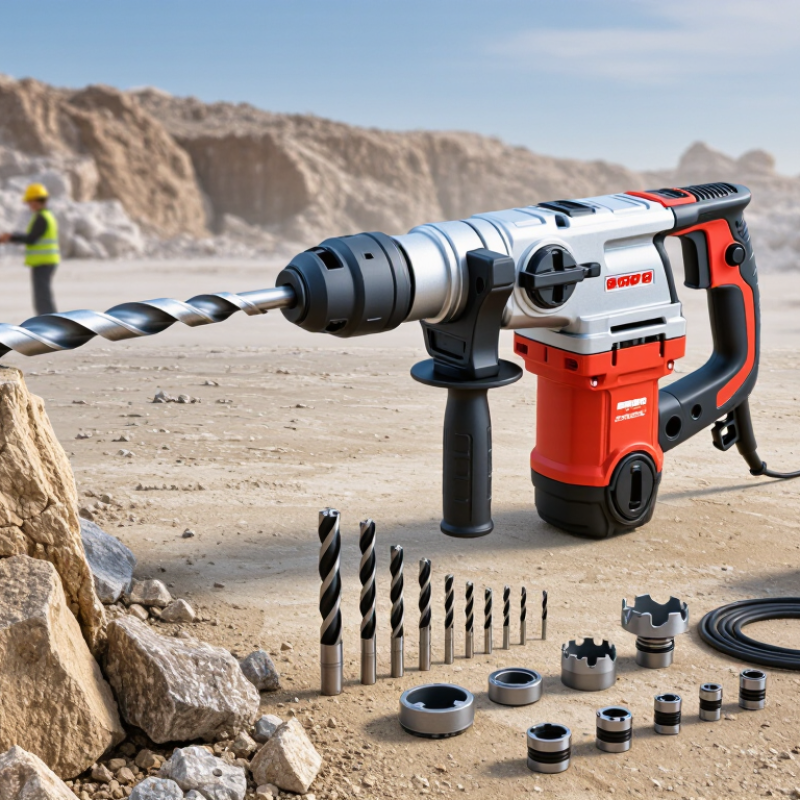
| Drilling System |
Choose pneumatic, hydraulic, or electric drive according to available power, ventilation, mobility, and operating environment. |
General-purpose drilling, construction work, quarry preparation, maintenance drilling, and utility work. |
Most common rock types, masonry, concrete, and reinforced concrete when the tool is rated for the application. |
Power source, duty cycle, operating pressure or voltage, hose or cable requirements, and suitability for wet or dusty areas. |
| Typical Hole Diameter |
Approximately 20–50 mm for common handheld rock-drilling applications; larger diameters may require a mounted drill or breaker-drill system. |
Rock bolts, small anchors, dowel holes, blast-hole preparation, drainage holes, and utility penetrations. |
Limestone, sandstone, granite, basalt, marble, concrete, and brickwork, depending on bit type. |
Required hole diameter, chuck or shank standard, bit availability, hole straightness, and maximum recommended diameter. |
| Drilling Depth |
Usually best for short to medium holes of about 0.3–2.0 m; longer holes may need extension rods, a feed frame, or a mounted system. |
Anchor installation, rock-bolt preparation, sampling, controlled splitting, and shallow exploration. |
Competent rock and concrete where the hole can be cleared effectively. |
Rod length, flushing method, maximum rod train, deviation control, and operator access to the drilling face. |
| Impact Energy and Percussion Rate |
Select enough impact energy for the rock hardness without choosing an unnecessarily heavy tool. Common handheld pneumatic units may operate around 15–30 J impact energy and 1,500–3,000 blows per minute, depending on design. |
Fast penetration in hard rock, anchor drilling, quarry work, and concrete drilling. |
Hard granite, basalt, quartz-rich sandstone, concrete, and other abrasive materials when the bit is correctly matched. |
Manufacturer-rated impact energy, percussion frequency, penetration rate, vibration level, and duty-cycle limits. |
| Rotation Speed and Torque |
A controlled rotation range is more important than maximum speed. Lower speed with adequate torque is generally preferred for large-diameter bits and abrasive rock. |
Rotary-percussive drilling, core-free anchor holes, plug-and-feather preparation, and drilling through mixed formations. |
Soft limestone, medium sandstone, granite, basalt, concrete, and mixed rock layers. |
Adjustability, stall protection, reverse function where needed, torque rating, and compatibility with the selected bit. |
| Tool Weight and Portability |
About 10–25 kg is common for powerful handheld pneumatic rock drills. Lighter models improve portability, while heavier models can provide greater drilling force but increase fatigue. |
Overhead drilling, ladder or scaffold work, confined spaces, repair work, and remote-site drilling. |
Suitable for rock and concrete where the operator can safely control the tool. |
One-person lifting limit, balance, handle position, anti-vibration mounts, shoulder support, and expected daily operating time. |
| Air or Hydraulic Consumption |
For pneumatic models, verify the compressor can continuously supply the required flow, commonly about 60–120 cfm at approximately 90–110 psi, depending on tool size. |
Continuous production drilling, quarry work, tunneling support, and construction-site drilling. |
Hard and abrasive rock formations where efficient flushing is required. |
Actual flow at working pressure, hose inside diameter, couplings, compressor reserve, air filtration, and water separator requirements. |
| Flushing and Dust Control |
Select water flushing for dust suppression and improved bit cooling where water is available; use air flushing with dust collection where dry drilling is required. |
Indoor concrete drilling, underground work, quarry drilling, and dusty construction applications. |
Silica-bearing stone, granite, sandstone, concrete, and masonry. |
Wet or dry capability, dust-extraction connection, water flow, drainage, operator respiratory protection, and local silica-control requirements. |
| Bit and Shank Compatibility |
Use carbide-tipped button bits or cross bits for rotary-percussive drilling; use appropriate threaded rods, taper tools, or specialized bits for the required hole geometry. |
Anchor holes, rock bolts, plug-and-feather holes, utility holes, and shallow production drilling. |
Soft to very hard rock, concrete, brick, and blockwork when the bit grade is appropriate. |
Shank dimensions, thread type, bit diameter range, carbide grade, replacement cost, and local availability of consumables. |
| Rock Hardness and Abrasiveness |
Match impact energy, bit design, rotation speed, and flushing performance to the formation. Hardness alone is not sufficient; quartz content and abrasiveness also affect wear. |
Formation drilling, quarry preparation, slope stabilization, and rock splitting. |
Limestone and marble: generally easier; sandstone: variable; granite and basalt: harder and often more demanding. |
Rock strength, abrasiveness, fractures, bedding, moisture, expected penetration rate, and bit consumption. |
| Vibration and Operator Safety |
Prefer anti-vibration handles, balanced construction, and a documented vibration value. Plan work time according to local hand-arm vibration exposure limits. |
Repeated anchor drilling, production drilling, demolition support, and overhead work. |
All materials, especially hard rock and concrete that require high impact energy. |
Declared vibration magnitude, trigger design, handle insulation, hearing protection, eye protection, gloves, and safe working procedures. |
| Durability and Maintenance |
Choose a sealed, serviceable design with replaceable wear parts and clear lubrication requirements for the expected dust, moisture, and operating hours. |
Remote quarry work, construction rental use, mining support, and frequent daily drilling. |
Abrasive granite, basalt, quartz-rich sandstone, concrete, and dusty masonry. |
Service intervals, lubrication system, spare-part availability, seal quality, corrosion protection, and ease of field repair. |
| Best Overall Application Fit |
A handheld rock drill is best for short-to-medium holes, mobile work, and locations where a compact tool is more practical than a rig. |
Rock bolting, anchor drilling, quarry preparation, utility work, controlled splitting, construction drilling, and repair operations. |
Limestone, sandstone, granite, basalt, marble, concrete, brick, and blockwork with suitable tooling. |
Confirm that the required diameter, depth, penetration rate, working position, power supply, and safety controls fall within the machine's rated limits. |
 KAT DRILLING